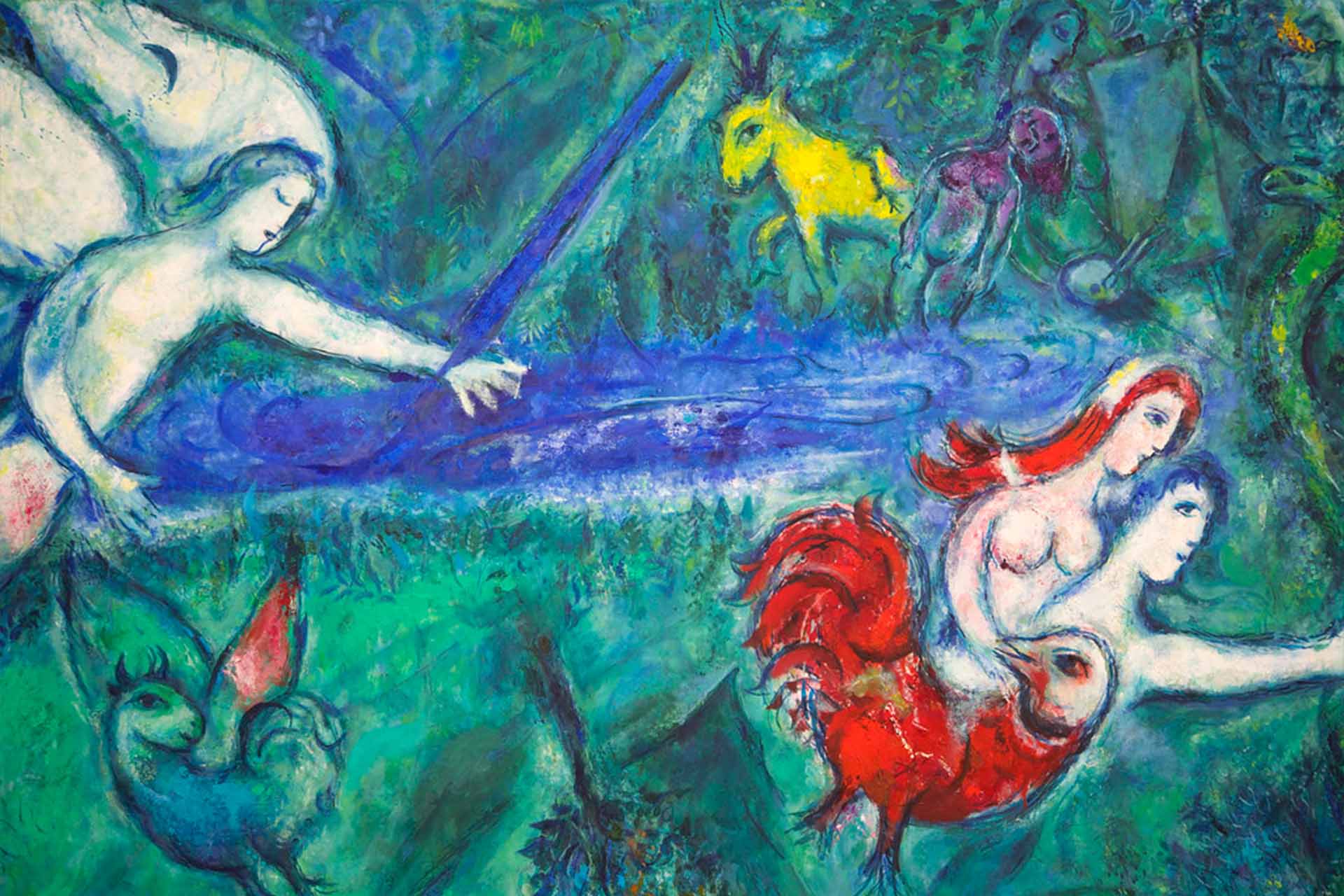
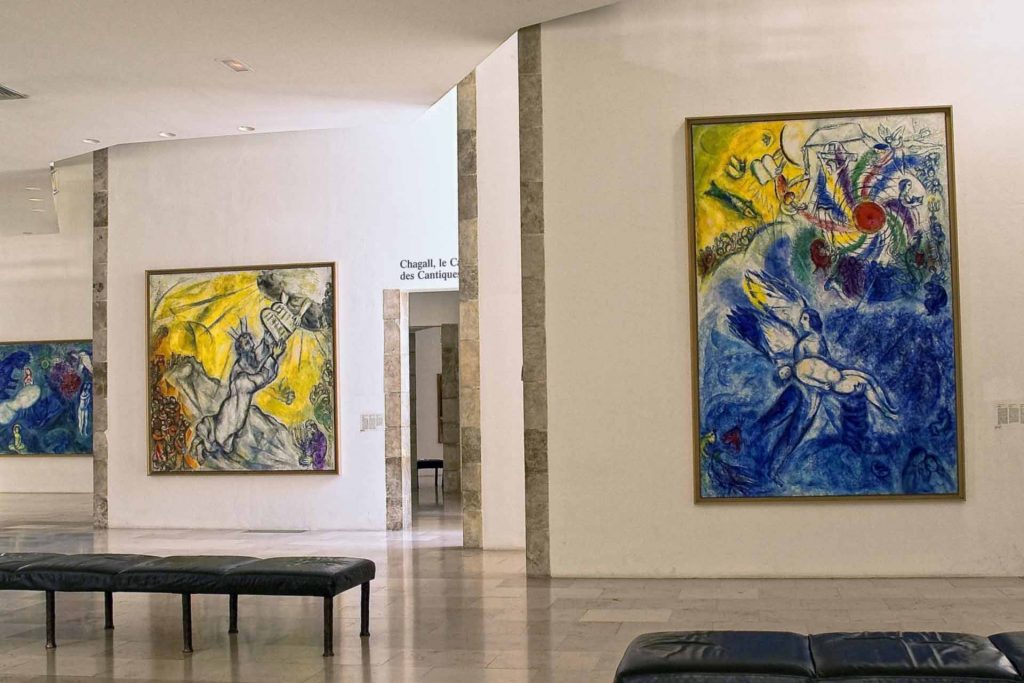
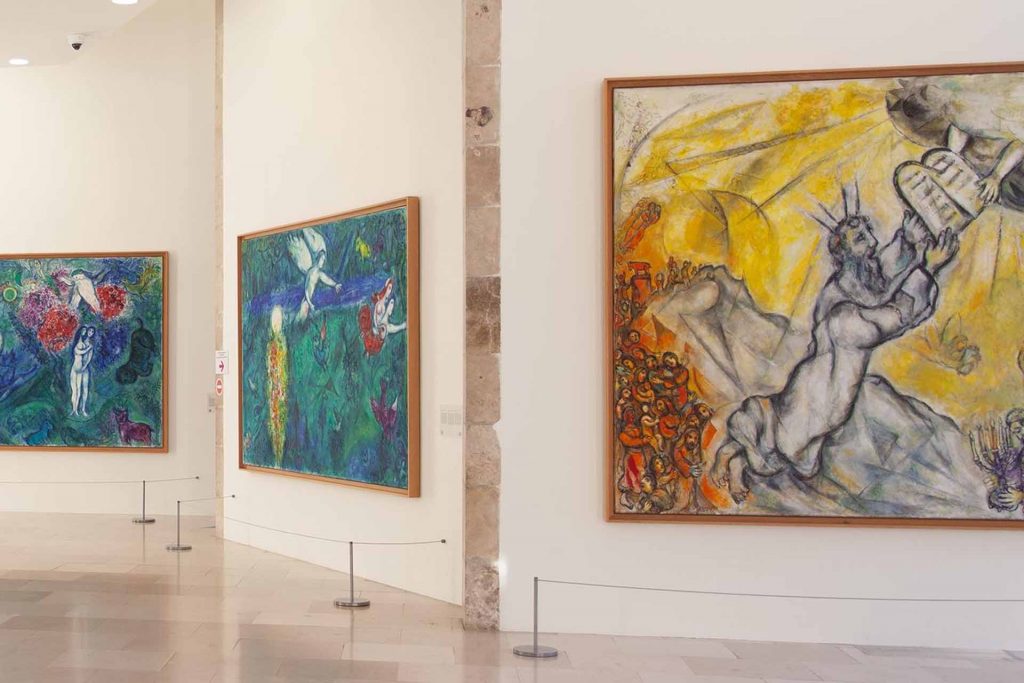
The Marc Chagall National Museum, created during the artist’s lifetime, houses the masterly cycle of the Biblical Message. It bears witness to the great diversity of the painter’s artistic practices. Paintings, drawings, prints, sculptures, ceramics as well as stained glass, tapestry and mosaics, constitute a unique body of work where technical virtuosity, colourful inventions and a universal message of peace are combined.
It is also known as the “National Museum Marc Chagall Biblical Message” (“Musée national message biblique Marc Chagall”) as it houses the series of seventeen paintings illustrating the biblical message, painted by Chagall and offered to the French State in 1966. This series illustrates the books of Genesis, Exodus and the Song of Songs.
Chagall himself provided detailed instructions about the creation of the garden by Henri Fish, and decided the place of each of his works in the museum. The chronological order of the works was not followed. As the collection has grown, what was a museum illustrating the theme Biblical message has become a monographic museum dedicated to Chagall’s works of religious and spiritual inspiration.
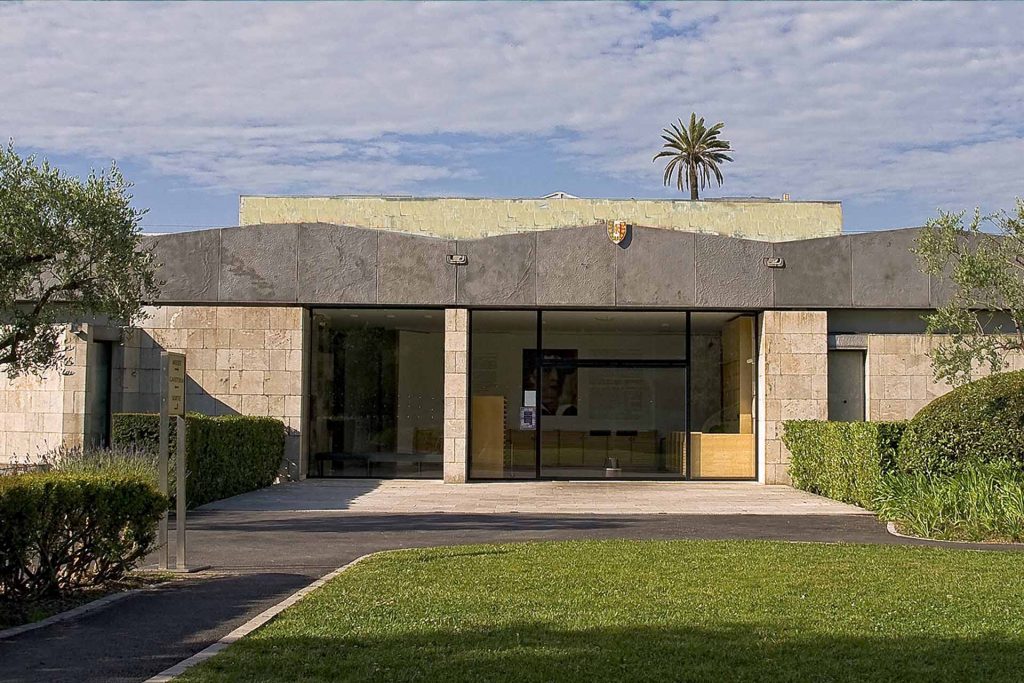
The Museum was opened in July 1973 by Chagall on his 86th birthday. For the first time in France, a living artist had opened a museum of his own works. The museum is housed in a building that was specially built for the purpose, and is surrounded by a garden of Mediterranean flora.