Ventimiglia: The Roman town of Albintimulium
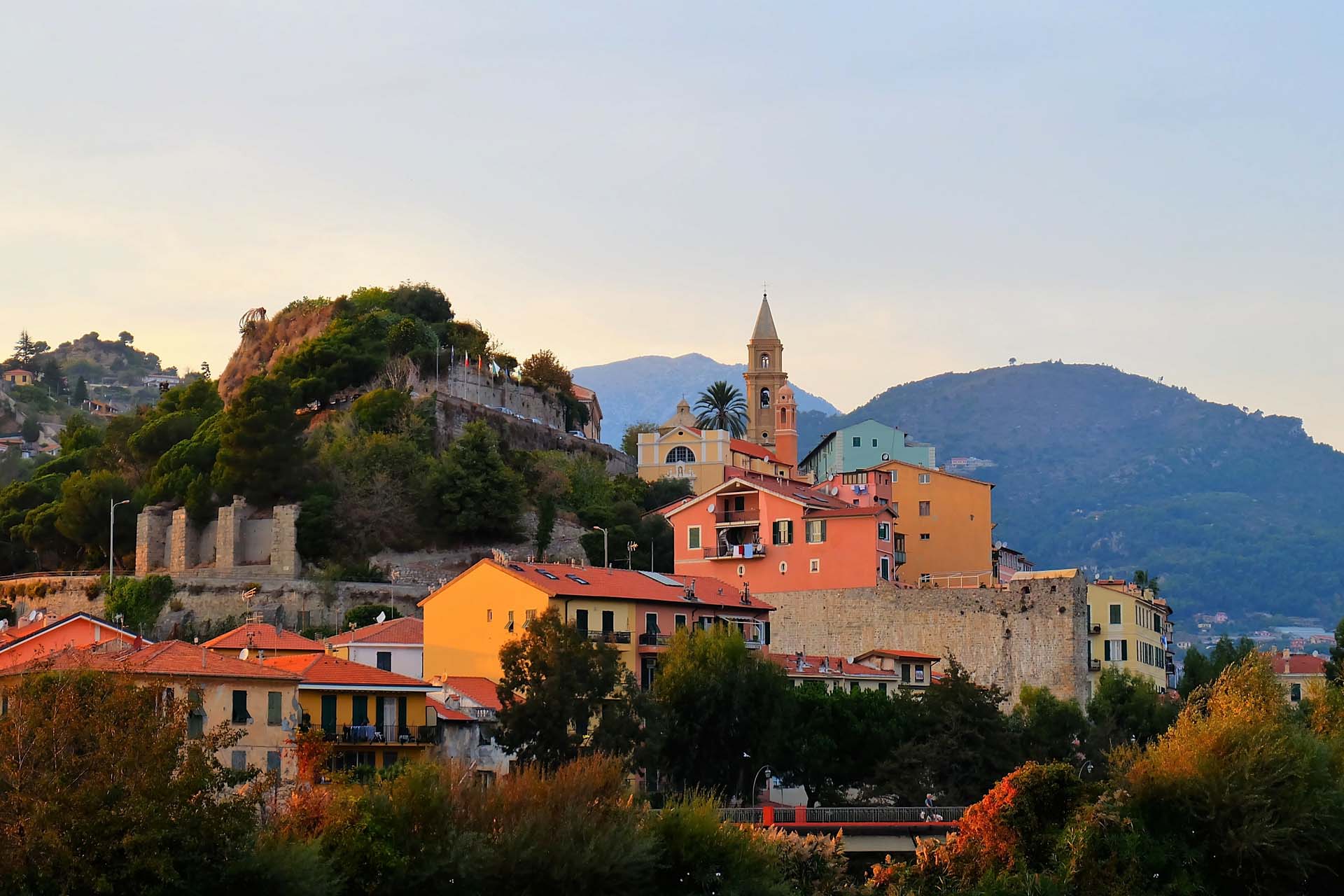
Ventimiglia once harbored a stoic Roman town known as Albintimulium, which survived until the 5th century AD, when it was besieged by the Goths. These days it’s besieged by a weekly horde of French bargain hunters who cross the border on market day.
Ventimiglia is on the edge of Italy; the first town visitors see when they enter the country from France. It has a character unlike any other Riviera town, retaining its traditional identity while adopting an eclectic selection of the new. There’s none of the glitz and glamour of its neighbors; instead it’s an honest, understated yet comfortable place to visit, explore or just be.
The station is less than 5 minutes walking distance to the centre and 10 minutes from the beach.
The Caves of the Balzi Rossi
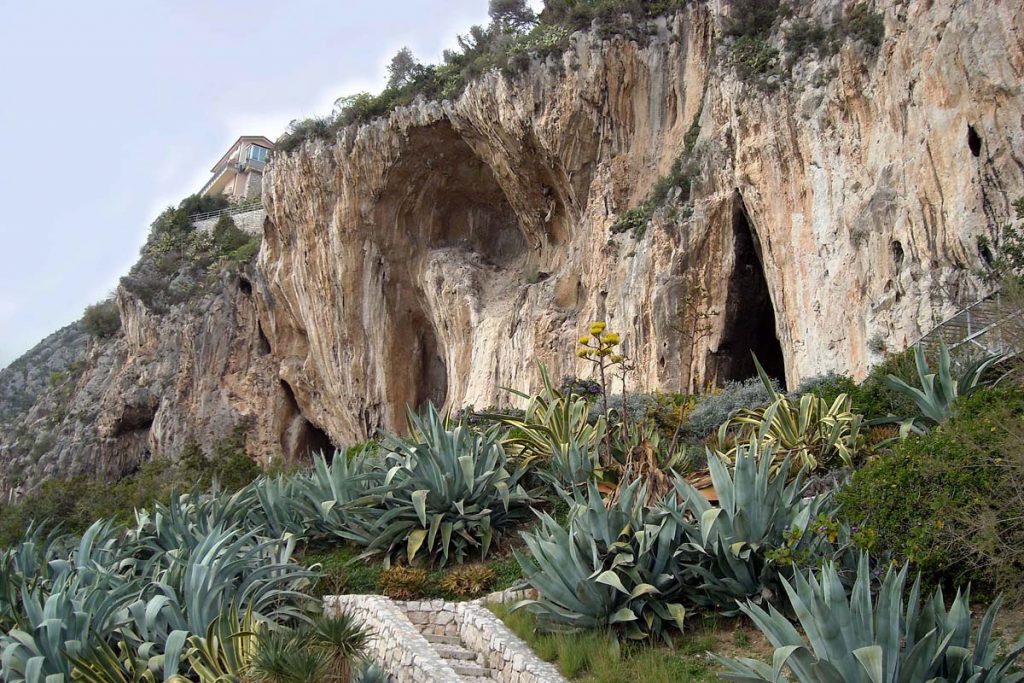
Near the border between Italy and France, in the suggestive coastal stretch of the hamlet of Grimaldi, there is one of the most important Paleolithic sites in Europe, the caves of Balzi Rossi with the attached prehistoric museum.
In the caves, which owe their name to the red color of the rocky walls, the remains of prehistoric burials of the cro-magnon man were found, but also animal remains belonging to very interesting species, such as the rhinoceros, the ancient elephant and the hippo.
The Theater and the Roman City
The Roman city of Albintimilium was founded at the beginning of the 2nd century BC and had an important role as an Italic center before the western provinces of the empire.
Today it is possible to see the walls in which the doors equipped with circular towers open and the theater, which dates back to the end of the second century AD. The Ancient Roman Theater is still used today for shows and entertainment.
Ventimiglia Alta
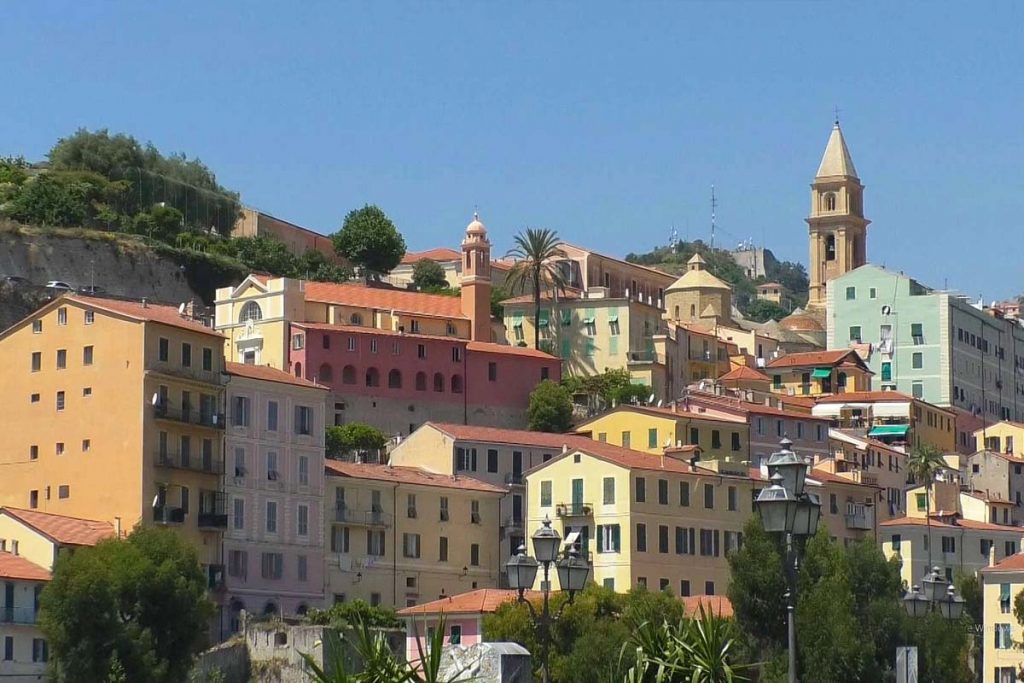
From the 8th century AD, with the arrival of the Lombards, the population abandoned the Roman city and the inhabited center was moved to the highest and most protected hill beyond the Roja river.
The upper town remained the center of Ventimiglia’s life until 1800, when the arrival of the railway favored the development of the city as we know it today.
Inside its walls and among its alleys there are churches, oratories, convents, noble palaces and an exceptional artistic heritage.
The best way to visit the city is to choose one of the streets that from the river level lead, between short climbs and steep stairs, to the top of the hill: in this way you will fully experience the labyrinthine sense of the urban fabric, marked by ups and downs, vaulted passages, dark corners and sudden bright squares.

Cathedral of Santa Maria Assunta
The cathedral of Ventimiglia is considered one of the best examples of the Romanesque architecture of Liguria. It rises above the remains of an ancient medieval church whose crypt can still be seen today.
The three-nave structure dates back to the 11th century. The apses and the extraordinary portal of the facade, built with the stone of the turbie, date back to the end of the 12th century. The interior of the cathedral, of great charm and suggestion, preserves very interesting paintings.
Next to the cathedral there is also the Romanesque octagonal baptistery dedicated to San Giovanni, perfectly preserved but not its original forms.
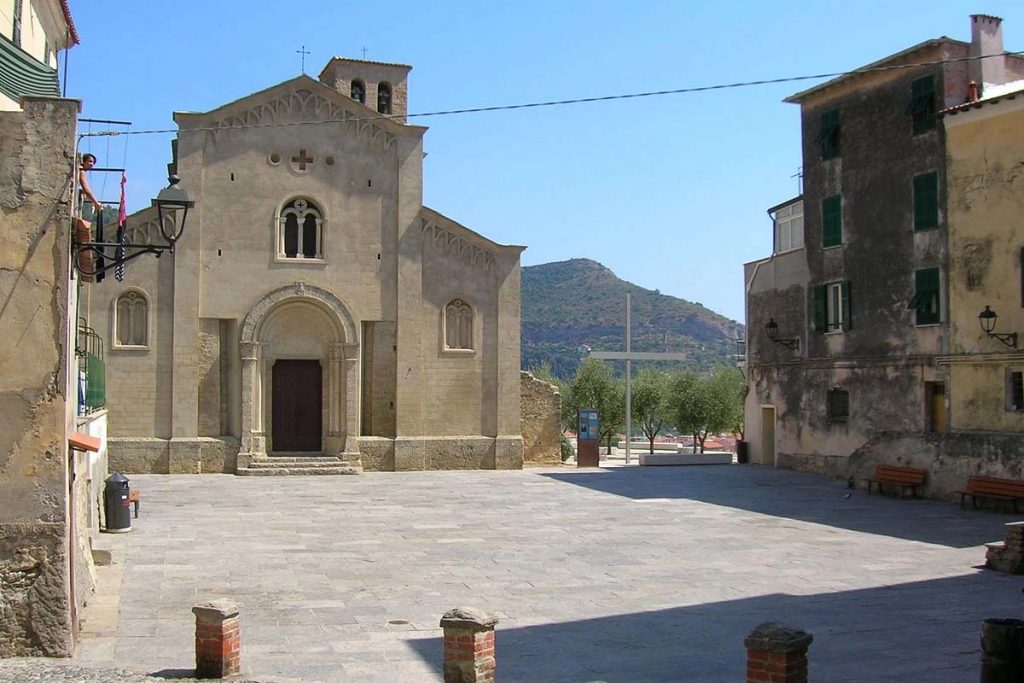
Church of San Michele
The church of San Michele was built in the 10th century by the Counts of Ventimiglia: despite the troubled history, marked by collapses, destructions and renovations, the interior still retains its cozy medieval atmosphere.
One of the peculiarities of the church is that some Roman columns dating back to the Emperor Caracalla have been reused. Just two of them are placed at the entrance of the church as a holy water font.
Aprosiana Library
The Aprosiana Library was founded in 1648 by Father Angelico Aprosio from Ventimiglia. It was the first public library in Liguria and today it is located in via Garibaldi in the historic center of Ventimiglia Alta.
The original collection, of which about 7000 volumes are preserved, constitutes one of the most important Baroque nuclei in Italy with very rare editions of considerable value.
The Hanbury Gardens
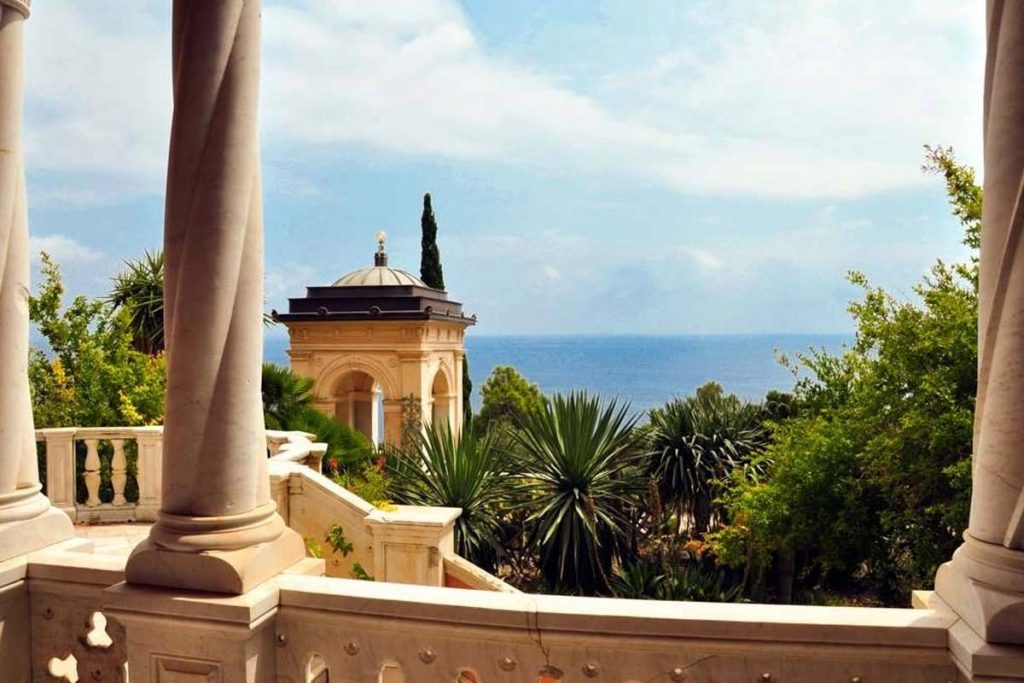
The Hanbury Gardens represent the most famous acclimatization garden of the Riviera and possibly one of the most important in Europe.
Thanks to the favorable climatic and natural position of Punta Mortola, the surface of this extraordinary park of 18,000 hectares and its interior coexist with exotic plants from all over the world and examples of Mediterranean flora.
The result is a grandiose ensemble that harmonizes with the villa, the other buildings and the ornamental elements such as fountains, stairways, benches and pergolas and the terracing sloping down to the sea.