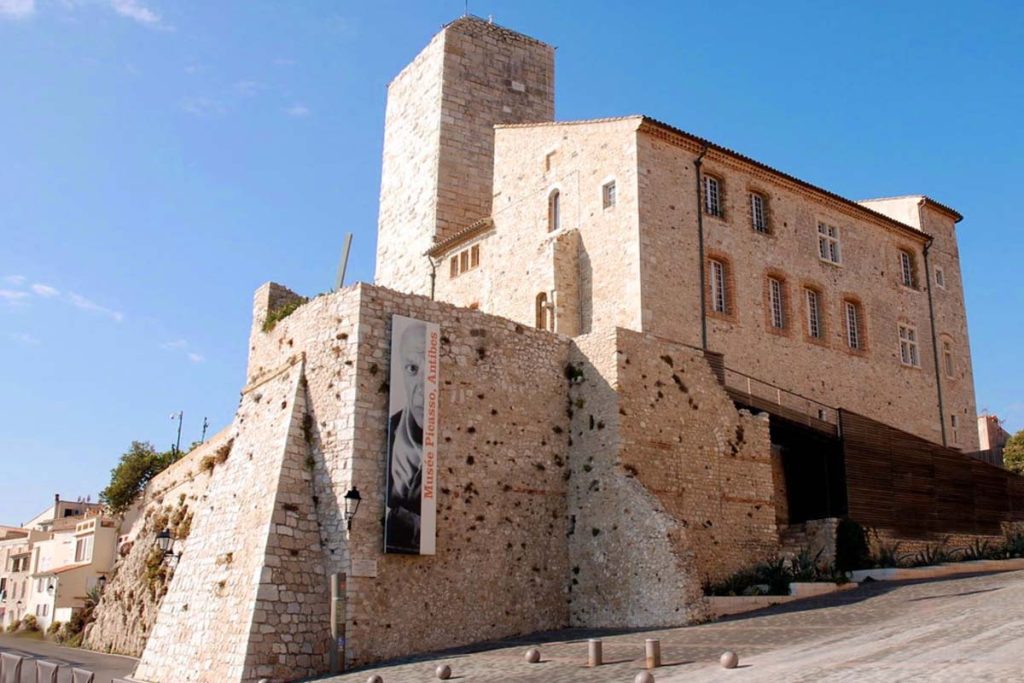
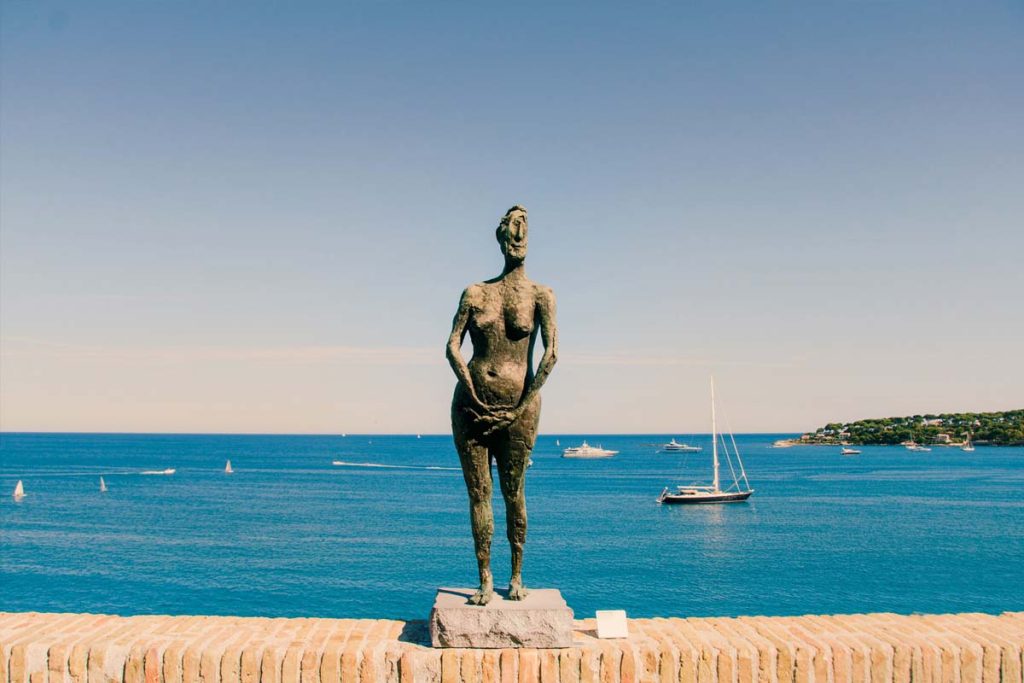
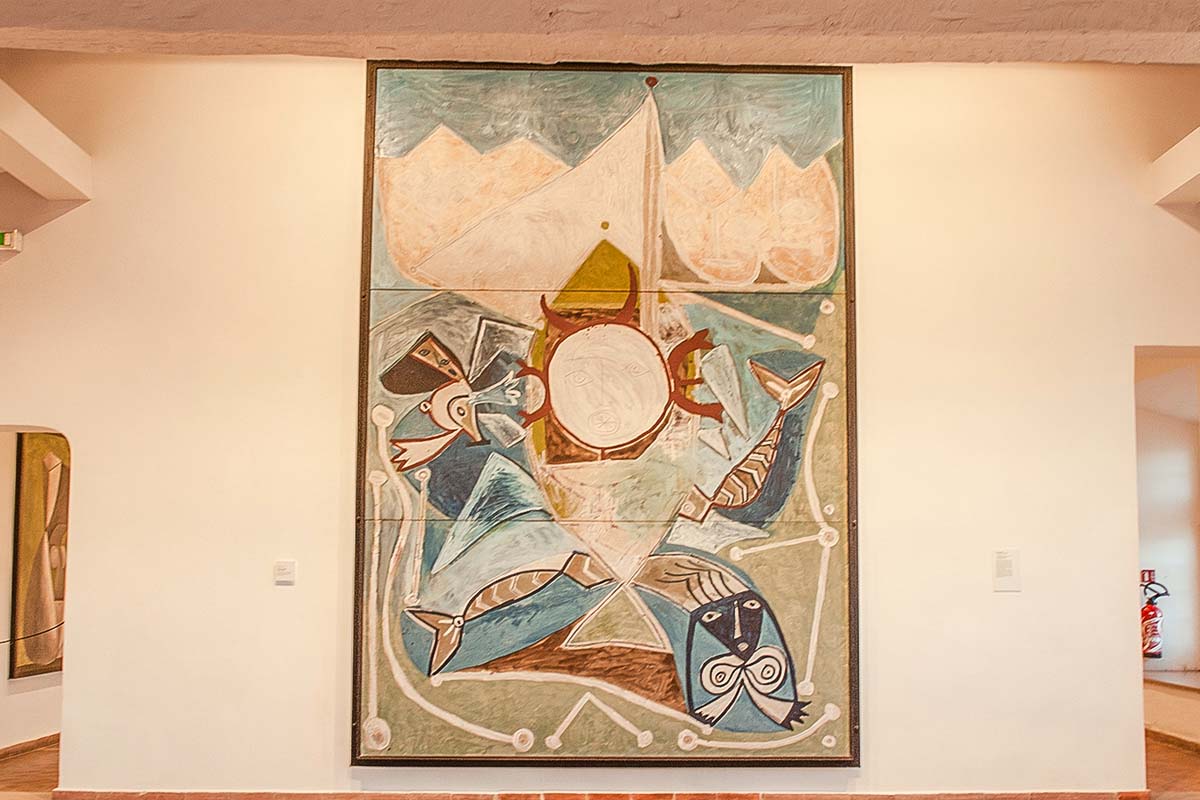
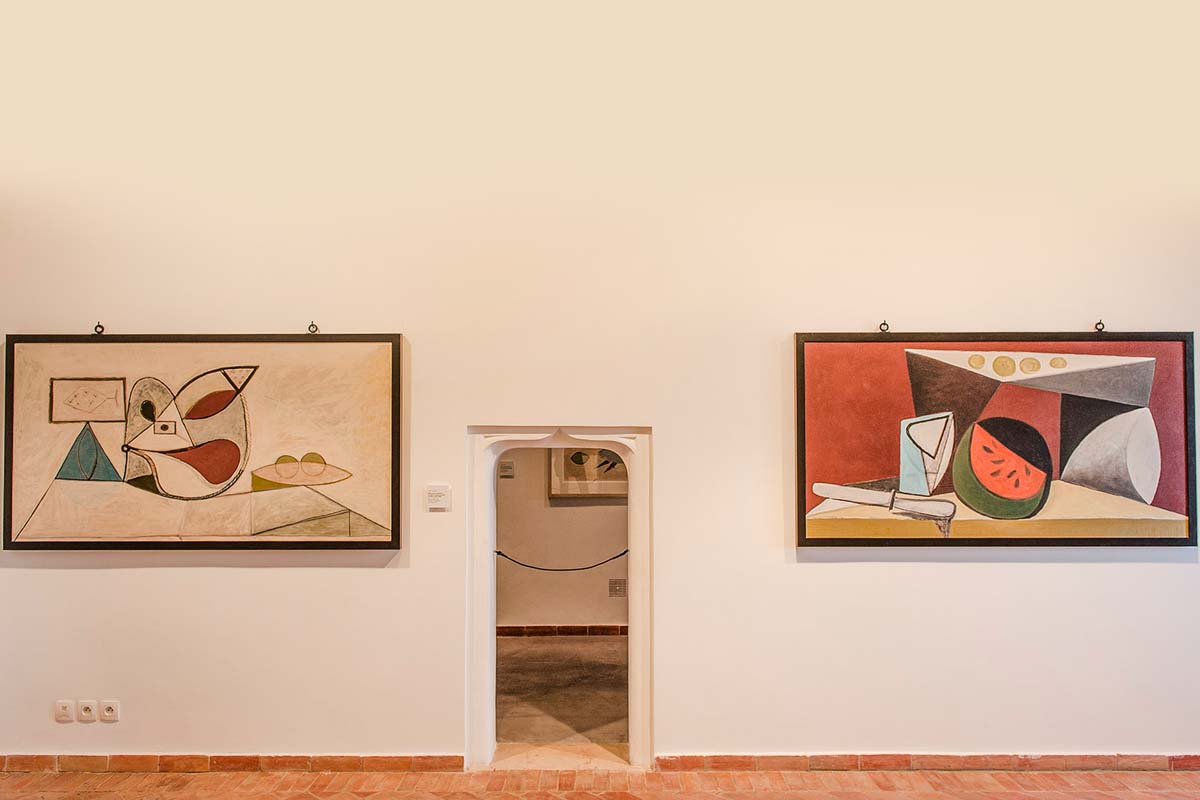
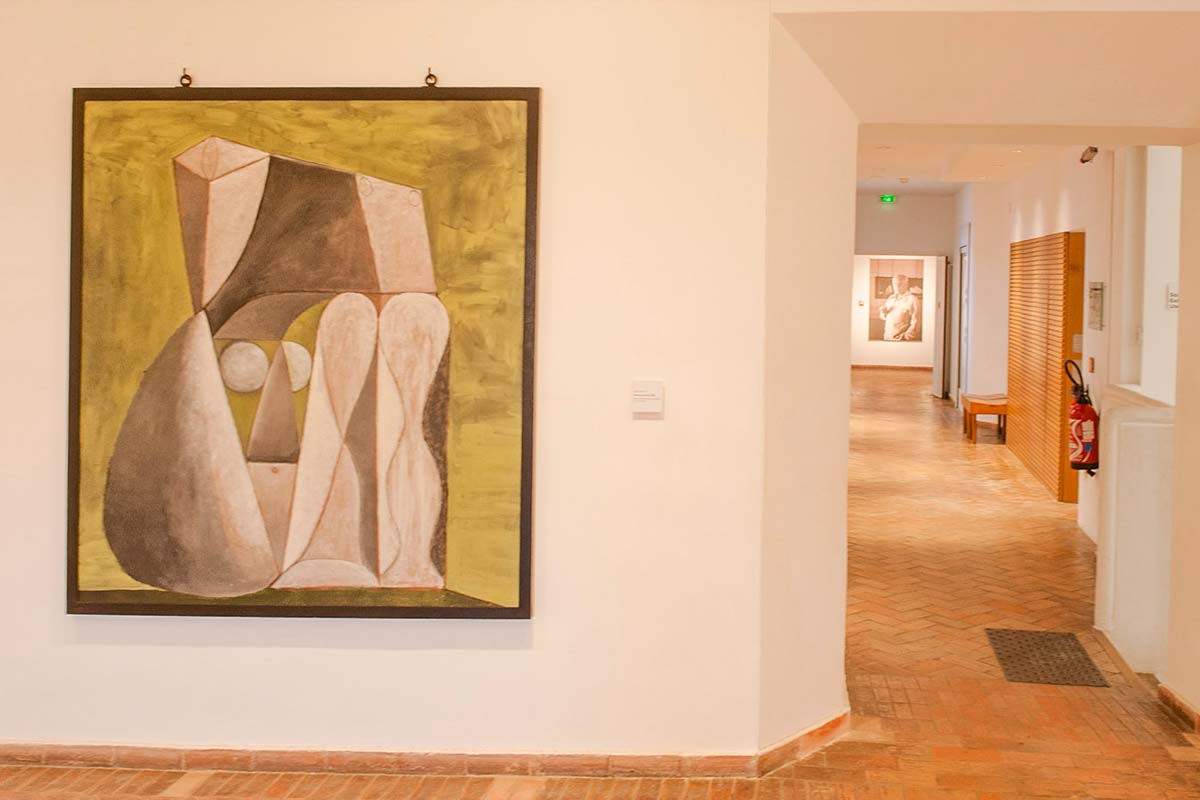
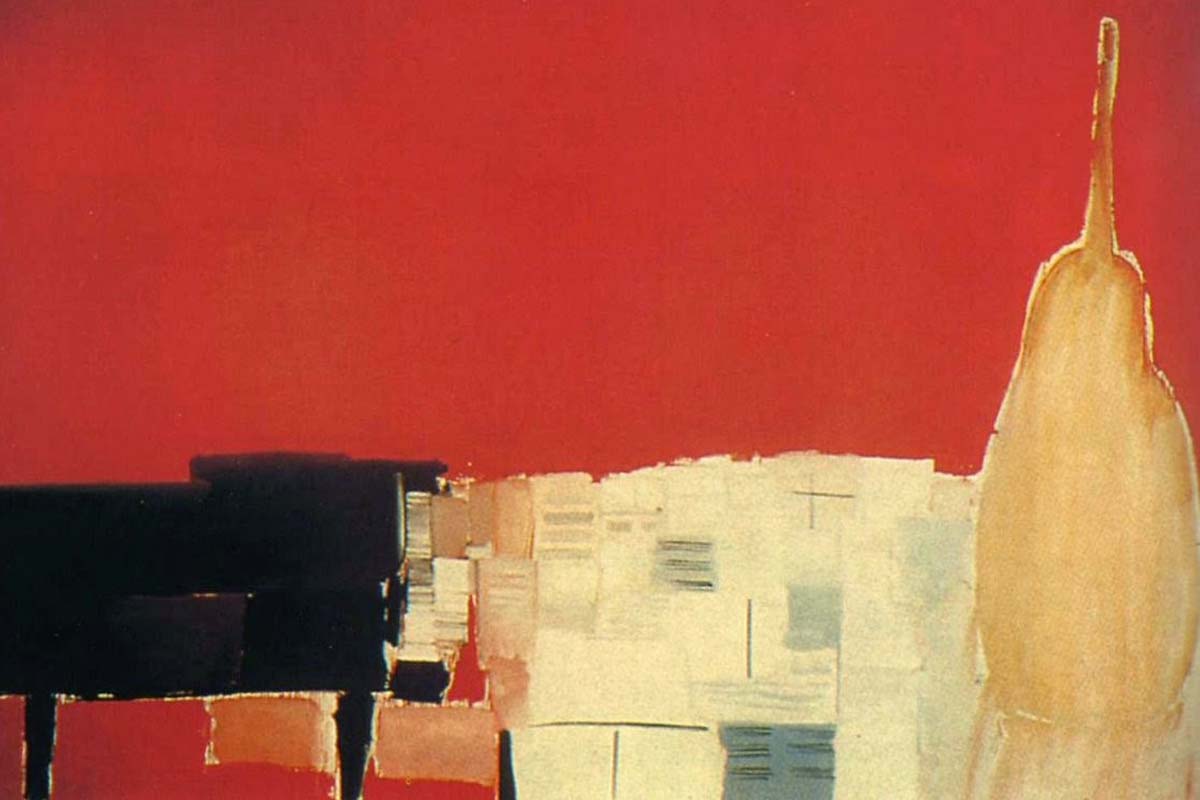
The Musée Picasso in Antibes claims to have been the first museum dedicated to arguably the most famous artist of the twentieth century. The fairly small museum has around 250 artworks by Pablo Picasso including paintings, drawings, and ceramics. Works by other modern artists, especially Nicolas de Stael, Hans Hartung, and Anna-Eva Bergman are also on display. The Musée Picasso opened in 1966 in the former Château de Grimaldi overlooking the Mediterranean Sea, with marvelous views from the terrace where a few sculptures are exhibited. Picasso used the upper floors of the castle as a studio in 1946 and donated some works to the town. The collection was later enhanced by purchases and further bequests.
With only roughly 250 works by Picasso, many visitors are left disappointed, as fewer than 30 paintings are on display and these are not amongst his best-known works. Most were painted during his stay in Antibes and thus the museum gives a glimpse into a very short period rather than an overview of his artistic life and work. Nonetheless, the paintings and a large number of drawings are clearly Picasso at work.
The terrace, with glorious views of the Côte d’Azur, has a few sculptures by modern artists including Miro and Germaine Richier.
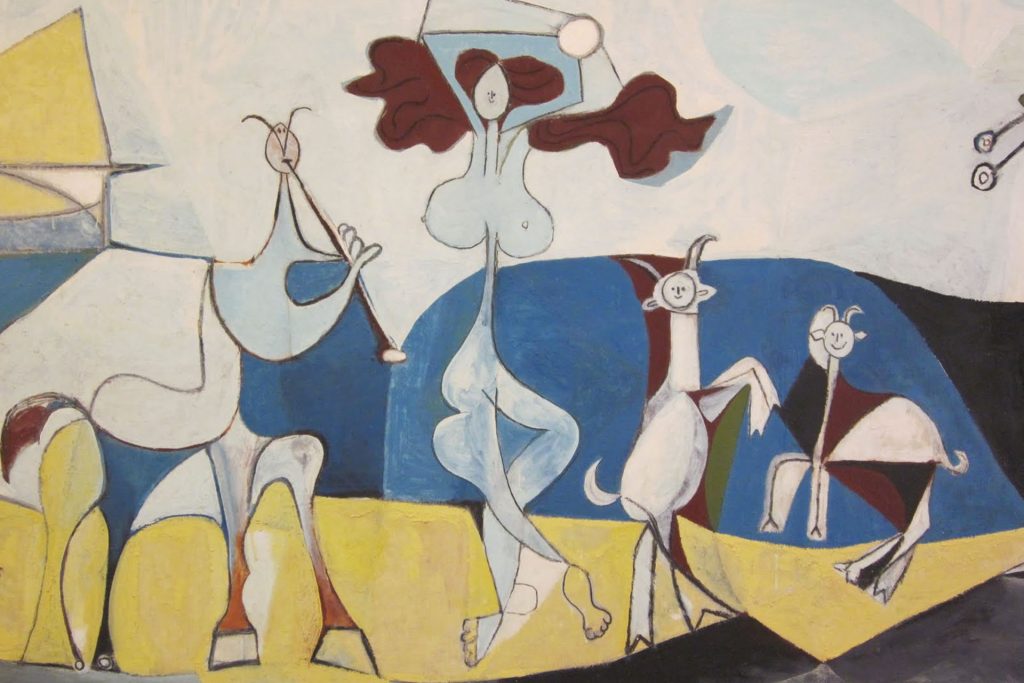
La Joie de Vivre
Created in 1946 in Antibes and exhibited in Picasso Museum Antibes, le Joie de Vivre is a unique pictorial work in panoramic format. With the difficulty of supply at the end of the war, Picasso used what he found: paint for boats and plates. Technically, the work is made with unusual materials, industrial oil painting on fiber cement board. These materials give a fluid paint, visible matter (brushstrokes) showing all the energy of the execution. The general meaning is that of the classic theme of a bacchanal, happiness linked to the found peace. Two musicians, a centaur on the left and a faun on the right, play aulos and diaula (a kind of single or double oboe from ancient Greece). A naked nymph is playing the tambourine and dancing with two kids. On the left, a sailboat is sailing towards the outside of the painting. On the right, a vine asserts the bacchanal. The work presents three emblematic elements specific to Dionysos: the goats that refer to the Dionysian animal; the aulos and the percussion which are used in the dionysies, and the dance of the nymph.